Thursday, 25 June 2015

Compassion and Gender

The recent high profile media reports regarding gender reassignment for Caitlyn Jenner and Kellie Maloney have highlighted issues which many of us may not have thought about recently. 

Gender identity seems to be more complex than a biological or physical given. This is shown in the case of trans women like Caitlyn and Kellie, but is true in the experience of most women and men. We see it in gender stereotypes. Aren’t all women supposed to like cooking and sewing? Aren’t all men supposed to like beer and fast cars? 


Not many of us fit these gender stereotypes… I find this every year when I look for a Father’s Day card for my dad. He doesn’t like beer. He doesn’t play golf. He doesn’t watch much football (though he might if mum let him!) He doesn’t like cars.

For Father’s Day Trentham Gardens hosted a transport festival – this held absolutely no attraction for me, and my family know me well enough not to ‘treat’ me to such an occasion!

I think we need to move away from gender stereotypes, and the assumption that just because someone has a certain biology, they must like certain things and act in a certain way.

This brings me back to where we began. How should we respond to trans women and trans men? There was some controversy on twitter when an automatic system was set up to respond to anyone calling Caitlyn “he”. A message was sent pointing out that Caitlyn is a woman, and should be referred to as such.

How would Jesus react? I cannot imagine Jesus debating with Caitlyn as to whether she is a man or a woman. I think instead that he would treat her with dignity and respect, and love her.

Too many Christians believe that part of our role is to go about judging people, and then telling them that God loves them, despite how evil or mistaken they are.

However, the Bible says that judgement is God’s job alone. Not ours. Our job is to love.

So what gender do we use when talking about a trans woman or man? The gender they want to be known as. This shows respect and love. 

Let’s remember to treat people with dignity as individuals. Let’s also be careful not to fall into all kinds of stereotyping and judgemental behaviours. It’s God’s job to judge. Ours to love.

Tuesday, 21 October 2014

Pastoral Letter November 2014: The Enigma

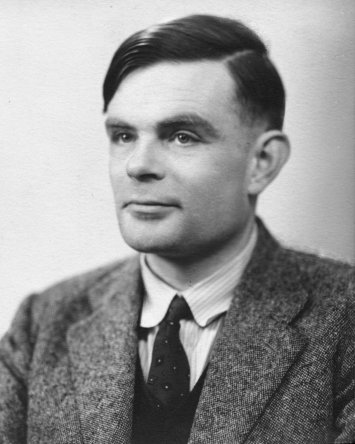
A major new movie is released on November 14, called The Imitation Game. It is the story of the brilliant mathematician and Second World War code breaker, Alan Turing, and is based on the biography by Oxford mathematics don Andrew Hodges, Alan Turing: The Enigma.

I read this biography over the summer, and it is a very thorough account of Turing’s life, from his childhood to his untimely death in 1954. The maths is quite detailed, and at times I kept up, but sometimes the maths and the logic went a little beyond where I had got to with ‘A’ level maths and computer science!


Turing was an amazing man who could rightly be called the inventor of the modern computer. His work at Bletchley Park during the war, breaking the German Enigma code, saved thousands of lives. Those first computers that Turing was involved with filled rooms, and yet today there is far more computing power in our mobile phones. He was a fellow of the Royal Society, as well as an accomplished long distance runner, who achieved world class results for his marathon times. He marvelled at the beauty of the world, and saw wonderful intricacies in nature that would pass many of us by. There is so much to admire in this man’s life.

Turing’s life ended tragically in 1954, apparently a suicide. In 1952 he had been tried and convicted for gay sex, and so lost his security clearance. Homosexual acts are no longer against the law, and Turing was posthumously awarded a Royal Pardon in 2013. Sadly, his mother died in 1971 without ever knowing about the secret work that he had done during the war, because it hadn’t yet been declassified.

Even though our laws have changed, there are many men and women who would feel unwelcome coming into a church today, fearing that the Christian believers would be judgmental and hostile. This is a very a sad situation – Jesus never turned anyone away, and he himself was accused (by the religious people) of hanging around with tax collectors and ‘sinners.’

In September Pauline preached on the story of Zacchaeus, and challenged us to think about who are the people that we might be excluding because they are so different to us. This may well be a whole range of people, who are different for all sorts of reasons: class; race; sexuality; politics or whatever.  As a church we need to think carefully about how we extend respect and welcome to those who live their lives differently to us. The gospel is not just for people like us, it is for all the people in our town, country and world.

For my sabbatical studies I have been looking at the Lord’s Supper, and throughout my research I have been struck again and again by the magnetism of Jesus. He was a man who demonstrated God’s love in his life and in his death. He went to the places that other people wouldn’t go to, he spoke with and befriended those that the religious establishment would rather ignore: the lepers; the prostitutes; the collaborators and the terrorists. Jesus had stern words for the religious: “Woe to you, teachers of the law and Pharisees, you hypocrites! You shut the kingdom of heaven in men’s faces. You yourselves do not enter, nor will you let those enter who are trying to.” (Matthew 22.13)

As plans progress for rebuilding the entrance to our building to make it more welcoming, let’s think as well about our hearts and minds. How can we be more welcoming as a church?

I remember again the words of Baptist preacher Billy Graham, who said, “It’s the Holy Spirit’s job to convict. God’s job to judge, my job to love.”

Thursday, 20 March 2014

Women up the tree

I'm currently right in the middle of a sermon series looking at the women in Jesus' family tree. Out of the whole list of men, there are four women who are mentioned in Matthew chapter 1. (I suppose five if you include Mary.)

Now it was not usual to include women in such a list, so these women are clearly included for a particular purpose. Was it because they were well-known? Well, they were well known, but perhaps not as well known as Sarah or Rebekah, who could have been included in the list.

What they all have in common, is that there was something slightly dodgy about them, certainly in the way in which they were perceived. Another thing that they have in common, is that they were all victims of men in a very patriarchal world.

Tamar had one husband die on her, one who refused to consummate the marriage properly (and according to the law), and then died. The third husband she was promised to was not given to her, and she ended up pretending to be a prostitute and sleeping with her father in law.

Rahab was a foreigner, a resident of Jericho, who was a prostitute. A rather bold woman, she saw which way the wind was blowing and switched sides. She turned traitor and helped the Israelite spies escape (where else should spies hide but in a brothel?!). Her treachery earned her her freedom and protection from the Israelites and from God.

Ruth and Bathsheba are yet to come, so I don't want to include too many spoilers, but suffice to say that the Sunday School versions of the stories do not perhaps capture the meaning of the Hebrew text...

One of the things that we learn from these stories, if we need the lesson to be reinforced, is that God uses ordinary, often broken people, to be a part of his amazing purposes.

He uses people who have been victims of others, and he uses those who have failed. He can take each of us and transform us as we identify with him in Christ. We can be forgiven, redeemed and restored.

Thursday, 27 February 2014

Bible Hunters

A long time ago, I planned that this Sunday I would preach on the textual reliability of the Bible. This has turned out to be quite good timing, as the heading of this blog indicates!

Some of you may have seen the UK BBC TV programmes called Bible Hunters, which have examined some of the work done by biblical scholars to recover earlier and more reliable manuscripts of the New Testament. Focus is given to Tischendorf, the Smith sisters and Charles Lang Freer.

I've only seen the first programme so far, though it is somewhat sensationalist in tone! The presenter, Jeff
Rose, is an archaeologist, and whilst I am sure he is an expert in his field, is quite clearly not an expert on New Testament texts or nineteenth century western Christianity.

There are a number of scholars interviewed in the programme. Professor Larry Hurtado is probably the most distinguished scholar that they interview, and he is certainly an expert on early Christian texts. His broadcast words, however, are few - perhaps twenty seconds over the hour long programme.

Much more time is given over to a certain scholar from Cambridge who was very excited that these discoveries were a bombshell to Victorian Christianity. As he is an expert in Classics, not the history of Christianity, or textual criticism, or any field vaguely related to the subject of the documentary, I am completely unpersuaded that he knew what he was talking about!

So it was a very excitable documentary, with lots of shots of Jeff  being Indiana Jones in Egypt. Rose on a Sinaiticus did not contain the so-called longer ending to Mark? Well, some of the medieval manuscripts had marks in the margin next to this passage, which suggest that even then people were aware that it was of doubtful origin.
motorbike, Rose on a boat, Rose on a camel, Rose buying a teapot (without appearing to haggle!) and Rose making various verbal slip ups.... The Bible written in Greek? Not the majority of it! The Old Testament written by Moses? I had to rewind that bit, I thought I'd misheard! And the shock horror discovery that Codex

Rose implies that the Resurrection hinges on the ending to Mark, but verse 6, in all the manuscripts, says, "You are looking for Jesus the Nazarene, who was crucified. He has risen! He is not here."

The Resurrection does not depend on the longer ending to Mark, and nor do any major Christian doctrines, unless one wants to count snake handling and drinking poison as key Christian teaching...

The final difference that Rose gets very excited about is that the phrase "Father forgive them, for they do not know what they are doing," is not in the Sinaiticus version of Luke 23.34. This would indeed by quite alarming if this was unique teaching, but we know that Jesus elsewhere urges his followers to forgive their enemies and to show love for them.

Good points - telling the story of the Smith sisters, a remarkable pair of women whose story is not often told.
Bad points - the slightly patronising tone towards the sisters learning languages, and the Bedouin's bread making skills. As well as all the slightly dodgy scholarship.

More on Sunday, and possibly next week too!


Monday, 17 February 2014

Revelation 22

Eternity

Beasley-Murray comments, "grace will have the last word." The story of the Bible begins with a wonderful description of paradise in Eden, but then the fall of humankind as they fail to honour God rightly. Many bibles give the title "Eden restored" to this section, and it is easy to see why.

The final chapter of Revelation, the final chapter of the Christian Bible, functions as an anticipation of what is to come. The whole of the vision gives us an insight into the spiritual realities of our present circumstances, and especially offers hope to those who are suffering.

A sample of the future

Just like those supermarket stalls that offer you a tiny piece of cheese to encourage you to buy the whole block, this chapter reminds us that we have now, even at its very best, is only a foretaste of what is to come.

We have the tree and the river that are provided for our healing, and the healing of the nations. The tree of life featured in the garden of Eden, alongside the tree of the knowledge of good and evil. Part of the curse that fell upon Adam and Eve and hence all humanity was the banishment from the Garden, and being no longer able to eat from the tree of life. That access is restored in the new heaven and the new earth, and will be for all the nations.

The curse is removed! The tree of life is now for all, and there will be no more toil, or pain, or sickness or dying. We will live in the light of heaven and have face to face access to the Lord God.

Our worship will be pure

The radiant glory of heaven causes John to want to worship, and he begins to direct his worship towards the angel who has showed him such beauty. The angel immediately refuses his worship and directs him to worship God.

There is a long standing feature of Jewish literature that includes an 'angelic refusal tradition', where angels
refuse worship and direct it rightly to God, as we see here. This actually highlights something else for us. Some critics will say that Jesus Christ is not honoured as divine in the New Testament, and that this is a later development. However in Revelation, worship is directed to Christ and he does not refuse it. This passage reminds us that worship is properly directed to the Creator, not to created beings. Since Christ is shown receiving worship we know that he is qualified for this, that he too is the Creator of the universe.

It also reminds us that sometimes when we see a lovely building or painting or sunset, we are impressed. We say, "Wow!" We don't always immediately thank God for his goodness, however! In the new creation our worship will be more properly focused on the Source of all.

The joy of the good news

As we draw to the end of the passage we are reminded of the importance of the good news. We are reminded that there is a division between those whose names are in the book of life, and those who are outside. Some may look at the list in verse 15 and think that there are not included: "those who practice magic arts, the sexually immoral, the murderers, the idolaters and everyone who loves and practices falsehood". However, it must be remembered that if we put anything in the place that is rightfully occupied by God, however good that is, we are practising idolatry. If family comes first in our lives, or a charitable cause, or our partner, or our heath and fitness, and we don't place a priority on the worship of God, and pleasing him, then we are idolaters.

This may sound tough, but there is a simple invitation at the end to "come". To all those who are thirsty. To all those who want to drink from the river of life, the call is to come. Come to Jesus, who is the Bright Morning Star, and in him find mercy, forgiveness and true meaning and fulfilment in life. This is a free gift, which is not earned by our good works, but by simply and humbly coming to Jesus with empty hands.

This is grace. In coming to Christ, we can receive what we have not earned. We receive the right to feed from the tree of life, and to enter into the gates of this wonderful city.

Grace will have the final word? Indeed it shall.

Thursday, 13 February 2014

Revelation 21

What does Revelation 21 say about heaven?

Continuity of the Old

We can see that there was a continuity between the old and the new. Acorns turn into oak trees, not into cats! In the same way there is a continuity between the old creation and the new creation. John demonstrates this as he recognises the New Jerusalem, the heavenly city, although as we shall see in a moment, it looks rather different to the city that John knew!

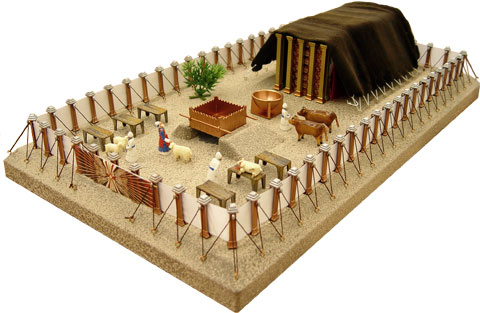
The New Jerusalem is where God's dwelling will be with people. The word used for dwelling links back to the word used for tabernacle in the Old Testament, and is also the same used in John's gospel, when we read that the word became flesh and dwelt among us.

It is also a place that is very physical. We shouldn't imagine that it will be all floating about on clouds, plucking harps and singing hymns. This is very earthy - a new heaven and a new earth.

What the new city is like

We see that the source of the city is God himself - he has created it. It has a high wall around it which reminds us of the security and protection that it offers to God's people. It is marked with the names of the Twelve tribes of Israel, and the Twelve apostles, showing that this is the home for all the people of God, whether ethnically Israel or not, who trust in Jesus by faith.

We notice that the dimensions of the city are another clue in numbers. Twelve thousand stadia can be broken down into 12, the number of the people of God, multiplied by 1,000, which is the cube of 10. The number ten usually signifies completeness in John, so the number 1,000 is that completeness intensified. John intends us to realise that the city is large enough to hold the complete totality of God's people in every age.

The description of the city as a cube is also highly significant. It is a perfect cube, and there are only three references in the Bible to perfect cubes. The final one is here in Revelation 21. The first reference is in Exodus, with the description of the dimensions of the Most Holy Place in the tabernacle. The second reference is in 1 Kings 6, with the description of the Most Holy Place in the Temple. The Most Holy Place could traditionally only be entered by the High Priest on one day each year, the Day of Atonement. But now the dwelling place of God is with the people!

Similarly, the Jews regarded holiness in a similar way to which we would regard radioactive material. It was highly dangerous, so only trained people (the priests) could handle it, and they needed special protective clothing to do so. What is interesting about the jewels mentioned in verses 19-20 (some of which we have to guess at their contemporary equivalents!) is that they are exactly the same jewels that decorated the robes of the High Priest described in Exodus 28. The Most Holy Place, where God himself dwells, is now open to all his people, who will live with him day by day.

What's Missing?

Finally John tells us what isn't in the city. There's no temple, which makes perfect sense in the light of the above connections. There's no sun, moon  or lamps - why would anyone need reflected or artificial light, when the glory of God is there?

There's no night, no darkness at all. There is no need for the city gates to be shut at nightfall, and God's people need no more protection from evil. And there will be nothing impure. Impurity cannot co-exist with the pure presence of God, so it will all be blown away.


Who's it for?

As we saw in Revelation 20, this city is prepared for all those whose names are in the Lamb's book of life. Those who don't trust in their deeds to get them to this wonderful place, but those who have trusted in the deeds of the Lamb of God, Jesus himself, who was slain for the rescue of all those who will accept this free, unearned, gift of amazing life.


Tuesday, 28 January 2014

Revelation 20 - part two

The binding of the satan 1-4

The first curiosity that we come across is the binding of satan, or the satan. If we understand that the millennium refers to the period of history between Christ's birth and his return, what does this mean? Certainly the world around us does not seem free from evil. There are enough distressing stories on the news for us to be aware of personal and corporate evil.

This refers back to satan's role in the heavenly court as accuser. That's what the Hebrew word means. So in Job, it is the satan's role to point the finger at Job, and say that he only loves God because things are going well.

Jesus tells us in Luke 10.18, when the 72 return from the mission to proclaim the Kingdom of God, that "I saw satan fall like lightning from heaven." As the Kingdom of God is proclaimed to the nations, the power of satan to accuse is diminished, or bound. The Kingdom is not limited to historic ethnic Israel, but is available to all people everywhere, so the deception that the Kingdom was just for one nation is removed.

So why will he released again? Tom Wright suggests that God uses the satan in his role as accuser at the end of time to expose human wrongdoing one last time, both to encourage people to repent, and in order to ensure that judgement is fair and open.

What happens when we die? 4-10

Do we go straight to be with Jesus, or is there a delay for us before the Resurrection of all?

Confusingly, the Bible seems to teach both. So we have Jesus saying to the repentant thief on the cross, "Today you will be with me in paradise." However, Paul in 1 Thessalonians 4.13-18 suggests that death is a form of sleep, and that we will awaken from that at the Resurrection. Although Paul also says that he wises he could depart, to be with the Lord, in Philippians 1.23.

This is all a matter of perspective. From the point of view of eternity, any period of time will appear to be infinitesimally small. So even if there is a delay, it will be just like when someone nods off after lunch for twenty minutes, and can't believe that the clock hands have moved around so fast!

So although those of us left behind will grieve, and will feel as though those who have died have been gone a long time, from the point of view of the person who has died in Jesus it will be as though they just nodded off, and suddenly they are with the Lord and all their brothers and sisters in Christ.

The awesome throne of God 11-15

The white throne of God is so awesome, that before his majesty, heaven and earth themselves flee away. In the presence of great beauty and purity, we become aware of our own inadequacies and failings. We don't need anyone to tell us how bad we are!

Before the throne are the two books.

The first, the book of deeds, records all the good things that I have done or thought or said. However, it also records all the bad things that I have ever thought or done or said. Worse than that, it records that I have not put God first in everything. Sometimes I have put myself first. Sometimes I have put my family or friends first. If I am judged on the basis of this book, then I too will have to flee away.

The second book is the Lamb's book of life. The amazing and wonderful thing is this: if my name is written in the book of life then I won't be judged according to my deeds. Instead, I will be judged according to the deeds of the lamb. When Jesus was earth he always put his father first, and so was declared the Righteous One. If I am judged as one whose name is in the book of life, then life I shall have, and reign with him forever.

Revelation 20 - part one: The thousand year reign of Christ

The tricky chapter! As if none of the others were!

The main area of dispute in this chapter is how to interpret the "thousand years" or the Millennium. There have been three main views (with probably countless variants!)

The first two views both regard the Millennium as being and actual period on earth of a thousand years.

Post-millennialism understands that there will be a period in human history of a thousand years when Satan is bound up, and so evil is restrained, and the followers of Jesus will experience only blessing on the earth. It is after this millennium (post-) that Jesus will return to the earth for the second time, bringing an end to human history.

This view was particularly popular in the nineteenth and early century, especially amongst those who saw the abolition of slavery and other social reforms as humanity 'improving' to the point where the blessings of Millennium would be experienced here and now.

The first world war and especially the Second World War brought a sharp shock to this interpretation of the progress of humanity. The horror of the Nazi extermination camps, in particular, seemed to mitigate against such a positive view of human development.

Pre-millennialism understands that Christ will return before (pre-) the Millennium. At this time he will take his followers to be with him (the rapture). Some premillennialists believe that this will be preceded by a seven year of tribulation (hence Post-tribulation premillennialists); others believe that the rapture will be followed by a seven year tribulation, and then Christ will return with his followers to commence the thousand year reign on earth. This pre-tribulation premillennial view has been popularised in the Left Behind series of novels by Tim Lahaye.

One of the key problems with this point of view is that the book of Revelation only refers to thrones in heaven, not on earth, apart from the throne of the beast.

The third view is that of amillennialism. This view regards the thousand year reign as symbolic, rather than literal, just as with the use of many other numbers in the book of Revelation. The number ten is used as a number to signify completion, so 10 x 10 x 10, or ten cubed, would refer to a period of time that is intensively complete. Viewed in this way, the thousand years refers to the time between Christ's birth and his second coming, and is John's final glimpse behind the scenes at human history, showing what is happening spiritually behind what is seen physically.

If I haven't given it away already, my approach to this text is an amillennial approach, as I think that this makes better sense of the text, and treats the numbers in the same way that I would interpret them elsewhere in Revelation, or even in the rest of the Bible. In Psalm 50, for example, we learn that the cattle on a thousand hills belong to God, whereby we are intended to understand that all the cattle belong to him.

Part two follows shortly!


Friday, 24 January 2014

What is Kingdom Theology?

This is the question that I was asked this morning, by a wise and learned gentleman, and I'm not sure I answered it very eloquently! The question is related to my studies with WTC, an MA in Kingdom Theology.

This is what WTC say on their website:

For the last few years, Westminster Theological Centre has pioneered a unique form and model of theological training, offering theological education that integrates the best of scholarship with the power and gifts of the Holy Spirit. We have seen over the years that this combination is powerful to transform, heal and release God’s people into His purposes for them. 
That describes more of their vision and values, than particularly describing 'kingdom theology' itself. A colleague of mine is doing his dissertation on exactly that question "What is Kingdom Theology?"

In a nutshell, I would say that Kingdom Theology is the study of theology with a particular emphasis on the power and work of the Holy Spirit. Our recent module looking at Kingdom Ministry traced a pattern through history of Israel and the Christian church, and highlighted examples of what today we would probably call the Charismatic movement.

WTC teach kingdom Theology from certificate level right the way through to Masters level, and may even launch a PhD programme at some point in the future. I'd highly recommend them! They're running taster days around the country and Channel Islands and the programme can be seen here.


Monday, 20 January 2014

Revelation 19

I’ve been continuing to preach my way through the book of Revelation in January, and I know many were encouraged as we came to chapter 19, and saw how the four amazing names of Jesus in that chapter are a real encouragement to us.

In verse 11 we saw the name “Faithful and True”, and this reminded us that even though there is so much injustice, and a lot that is unfair in this life, Jesus is perfectly qualified to bring a final reckoning. He will judge with full knowledge and insight, symbolised by his burning eyes. He has the true authority to judge, as we saw from the crowns on his head, and he will always be faithful and true to his people.

In verse 12 we discovered that Jesus has an “unknown name”, and this reminded us that there is a deep sense of mystery about Jesus, some things that we will never know fully. He has conquered his enemies through costly and personal sacrifice, through the price of his own blood. He also understands his people’s pain and hurt, and identifies with all who are weak and vulnerable.

In verse 13 Jesus has the name “the Word of God”. This reminded us that God’s Word has power, and that his promises are always sure and come to pass. We saw how Jesus promises blessing to the guests at his marriage feast in heaven, and that he promises justice even to those who have got away with so much. The reckoning will come. We can be sure that he will keep his promises, because the Word of God is certain, and was the means by which the universe was created.

In verse 16 we Jesus is called “King of kings and Lord of Lords”. This is not a title that is given to him because he has conquered his enemies, but because it describes who he is in his very being.  It is the reason that he is able to overcome so easily and mightily. We were reminded that the battle between good and evil is not an equal battle, such as might be depicted in “The Hobbit”, but it is a massively unequal battle, where Christ overcomes evil through his divine status and invincible might.

We don’t serve and worship a meek and mild saviour, but one who is mighty and invincible, who has already overcome in the spiritual realm, and we can be certain that we will experience and share in his victory.

Nik

Friday, 10 January 2014

NBC Pastoral Letter January 2014

Shortly before Christmas we had a sermon mini-series on worship, looking at the central place of worship in our lives, and some of the ways that we express that.

We looked at our Sunday worship, and saw how it should be Christ centred, Spirit led, and a response to the love of the Father. Our worship then, is fundamentally trinitarian.

The musicians are looking further at these principles, and seeing how they are worked out in the way that they play their instruments as they help us in our Sunday services.

Christmas has reminded us of why it is that we respond to God as father. He sent his son into the world, to be the means by which we can know forgiveness and have a fresh relationship with God, one to one. By his grace we become, as Paul puts it in Galatians, a New Creation.

This is what we are in Christ, and so we should express this in our worship together by being open to one another and to what God wants to do in us and through us. One of the great principles in our baptist heritage is that we believe that we can all minister to one another as we are empowered by the Holy Spirit. Therefore in public worship we must remember to listening to what God is doing, and be ready to share that with others. This might be a word of encouragement for an individual, and we know who it is for, so we can share it directly. Or it might be an encouragement and we don't know who it is for. In this case, please either attract my attention during the service or immediately afterwards, and then we can share that encouragement publicly.

Every blessing in Christ for 2014,

Nik

Monday, 21 May 2012

NBC Pastoral letter, June 2012


“But let justice roll on like a river, righteousness like a never-failing stream!” (Amos 5:24)

The church anniversary is almost upon us again, as we celebrate the congregation meeting in Newcastle on London Road as 140 years old.

Of course, Baptist Christians have been meeting in Newcastle even longer than that, and in various locations around the town. We’ve been experimenting with the different location for quite a few months now!

Meeting in a different location reinforces the truth that our Baptist pioneers fought for in the seventeenth century, that the church is not a group of people living in a particular part of town, it is much less the building. Instead, the church is made up of people of faith who gather to worship him.

This year marks an important anniversary in our Christian heritage. The first English Baptist church on English soil was founded in Spitalfields, crucially then outside the boundaries of London, in 1612. Amongst the group was Thomas Helwys, who in the same year published the first plea for religious freedom in the English language. It had the rather snappy title of A Short Declaration of the Mistery of Iniquity, and was an appeal for people to practice their faith according to their conscience, Church of England, “them of the Romish religion” (Catholics), “Turks” (Muslims) and disssenters alike.

Perhaps rather tactlessly, Helwys sent a copy to King James I, along with a covering letter that said,
“Hear, O King, and despise not the counsel of the poor, and let their complaints come before thee. The king is a mortal man and not God, therefore has no power over the immortal souls of his subjects, to make laws and ordinances for them, and to set spiritual lords over them. If the king has authority to make spiritual lords and laws, then he is an immortal God and not a mortal man. O King, be not seduced by deceivers to sin against God whom you ought to obey, nor against your poor subjects who ought and will obey you in all things with body, life and goods , or else let their lives be taken from the earth. God save the king.”

Unsurprisingly, Helwys was thrown into Newgate prison, and he died there four years later at about the age of forty.

It is a sobering thought, that the founder of what became known as Baptist churches was thrown into prison by the state, where he died for his beliefs.

Many Baptist Christians since have argued hard for justice and liberty, and have often suffered for taking such a stand in accordance with the teachings of the Bible. Martin Luther King was killed for his campaign to end racial segregation in America. William Carey devoted his life to people in India, translating the Bible and also speaking out against injustices such as the caste system.

The Christian gospel speaks of transformation. It transforms our lives as individuals, but we are also called to stand up against injustices in n society and in the world.

As we celebrate a church anniversary, and think of 400 years of English Baptist witness, let us be inspired to continue to share the good news, and speak out against injustices.

God bless,

Nik

Friday, 27 April 2012

NBC Pastoral Letter May 2012


As we’ve been looking at the life of Abram, we’ve been reminded that God does not keep us away from difficult circumstances, but he uses them to help us to grow in our trust of him.

When we face difficulties, the Christian has a choice of what to do. Do we run to other people or other things, and find our comfort and protection there? Or do we, however weak we feel, run to God, trusting in his promise to never abandon us, and remember that he is always faithful to us.

It is a test of our Christian maturity as to which direction we run.

As we look ahead to the future, as individuals and as a congregation of God’s people, we need to put him first in all things. We need to come together as his family, praying together and worshipping God together. We need to give God the honour that he deserves, and place our lives into his hands.

On this website you can read of the discussions that are taking place about the future of the Baptist Union of Great Britain (A Q and A is here). It may be that we feel that much of this conversation is irrelevant to us in our local congregation, because we are self-governing. However, an important aspect of our lives as Christians is to watch over one another, and the Baptist Union offers much support to churches and people that we don’t fully appreciate until we need it ourselves. It is part of our responsibility to care for others, even those that we don’t know personally.

We also think about our local situation, and the needs that we face. We don’t just face a need for a suitable building! We need to care for one another better, whether that is picking up the phone or sending a text, or making a visit. We can express our care in serving refreshments at the end of the service. We can show we care by helping set up the hall for our morning services, and putting away afterwards. We can show we care by helping with the children’s groups during our morning services, so that it is not the same people going out every week, year in, year out, and that parents get the opportunity to stay in the services too. We show our care by helping with the building maintenance.

If you would like to show your care for others in the congregation, but don’t know who to speak to, please have a word with me or with Alan, and we’ll point you in the right direction.

Something that we can all do to show our love and care is to pray for one another, and support those that God has called into leadership in the congregation, and that we have affirmed through our church meeting.
The writer of Hebrews puts it this way:

“And do not forget to do good and to share with others, for with such sacrifices God is pleased.  Have confidence in your leaders and submit to their authority, because they keep watch over you as those who must give an account. Do this so that their work will be a joy, not a burden, for that would be of no benefit to you. Pray for us. We are sure that we have a clear conscience and desire to live honourably in every way.” (Hebrews 13.16-19)

God bless,

Nik

Monday, 19 September 2011

NBC Pastoral Letter October 2011 - Pride


James 4.6 “God opposes the proud, but shows favour to the humble.”

What is Pride?

The Oxford English Dictionary defines it as “A high, esp. an excessively high, opinion of one's own worth or importance which gives rise to a feeling or attitude of superiority over others; inordinate self-esteem.” It is also recognised as the first and worst of the traditional seven deadly sins, often being the base from which the others are reached. It is such a serious matter that James quotes these fearful words form Proverbs, that God opposes the proud.

So what do we have pride in?

Our own abilities. We think that we don’t need anyone’s help, but actually the reason we say this, and overwork ourselves, is because we want all the credit. We want people to praise us for all that we have done. Not needing anyone’s help also means that we won’t seek God and the power of his Spirit to live for him, because we believe we can do it all ourselves.
Our own goodness. We think that we’re good enough –  we don’t really think, do or say anything wrong. We’re better than others, who do make mistakes, and therefore we don’t need God’s forgiveness. Of course John tells us in his first letter, that if we say we have no sin, we make God out to be a liar! So this cannot be true.
That we are right. When we believe that we are right, and we’re proud of that, we won’t try to forgive other people for their mistakes, because they are clearly wrong. We won’t try to draw close to people we disagree with. Instead we will expect them to come to us, crawling on their knees, confessing their wrongs and begging our forgiveness. How arrogant!
Our wealth. We don’t seek God for his provision, but rely on our insurances and pensions and savings. Now, none of these things are wrong in themselves, but if our pride is in them, and our trust is in them, then we will not look to the Lord as our Provider. “You do not have because you do not ask,” writes James later in chapter 4.
Our religious heritage. We may be proud that we are a Christian nation, or that we come from a Christian family, or that we have been a Christian for more than fifty years. These things may or may not be true, but Paul says in Galatians 6, “May I never boast except in the cross of our Lord Jesus Christ, through which the world has been crucified to me, and I to the world.”

What is the antidote to pride?

There are five things that are part of the antidote to pride, and they are very simple. Mark Bailey simply tweeted the five words! I expand them below.
Service. Not a prideful kind of service or volunteering, where we want to be noticed by others and valued by others. This kind of service we will withdraw if we do not feel valued enough. Instead a humble obedience, that is inconvenient at times, sometimes doing stuff that we know other people are better suited to. Christian service is God’s love in action.
Humility. This is when, as Paul says in Philippians, we consider others as better than ourselves. It is totally against human nature, and we need God’s Spirit to enable this kind of humility. It means always entertaining the possibility that we may be wrong.
Prayer. Prayer is the heart of our relationship with God through Jesus Christ. He longs to hear us, and he longs to speak to us. As I was preparing this as a sermon, I read in Michael Wenham’s blog, “God doesn't value you for what you do; he values your company. He's interested in you - incredible as it may seem.”
Acknowledging God’s Lordship. This means handing over control of our lives to God. It is so hard! But God our heavenly father always wants the best for us, and always knows what is best for us. Even though in our following of Jesus we often slip up and make mistakes, God is always ready to set our feet back on the path when our hearts yearn after him and his mercy.
Stop complaining. Maybe you have never realised that complaining is a form of pride. We all do it on occasions, and it usually makes us feel better. But it hardens our hearts. It makes us bitter and unloving. We feel that we are the judge of what is good and what is not, and our hearts become full of unforgiveness. Instead of this, let us always look for the best in people, and be constructive and helpful.

Above all, we must remember what God says through Micah:
“He has shown you, O mortal, what is good.
   And what does the LORD require of you?
To act justly and to love mercy
   and to walk humbly with your God. (Micah 6.8)

May God bless you.

Nik

Tuesday, 12 July 2011

NBC Pastoral Letter August 2011

How do we connect with God?

I guess for each of us, the answer is probably different, and is probably different throughout our lives.

For some, it will be through the disciplines of daily bible reading, or prayer, the traditional “quiet time”. For others, it will be through experience of God’s great creation. Sometimes it will be a mystical experience, or a vision, or a dream. Sometimes it will be during personal or public worship. Sometimes it will be an encounter experience – a special time or a special place for us to look back on.

I well remember my call to ministry at Spring Harvest in 1992, a special week which they called “High Risk”. (I should have known!) it is one of the rare occasions that I have heard God’s voice audibly, as he called me to follow him and serve in ministry. It was accompanied by a picture of Christ walking with his disciples, and an instruction to spend myself in discipling followers of Christ.

There are many calls on my time from family and church, but the times that work best, and when I feel my spirit sing, are when I’m engaged in that ministry of discipleship, whether it’s a big group, or one on one.

In the old movie, Chariots of Fire, the runner Eric Liddell says, “I believe God made me for a purpose, but he also made me fast. And when I run I feel His pleasure.”

God has made each one of us purpose, as we know from Ephesians 2.10 “For we are God’s handiwork, created in Christ Jesus to do good works, which God prepared in advance for us to do.”

Maybe that is coming alongside others, or giving practical support, or medicine, or teaching or playing football. Whatever it is, when we fulfil God’s purpose, we feel his pleasure. And our spirit will sing.

God bless,

Nik

Tuesday, 26 April 2011

NBC Pastoral Letter May 2011


This month I was struck by what Jonathan Edwards, the General Secretary of the Baptist Union had to say in the BUGB publication Transform, and I thought it deserved a wider readership. So I have quoted it below…

I am often interviewed. Sometimes the interview takes place in a radio studio and I am grilled by someone who fancies themselves as the next Jeremy Paxman! However, more often I am interviewed in the gentle context of a service of worship. I have discovered that there are two main questions that I am asked. The first is “What encourages you most about the Baptist Union?” and the second is “What depresses you most about the Baptist Union?”

I find both questions easy to answer. Without any question the most impressive and encouraging aspect of our life together in the Baptist Union is the bubbling creativity that I find wherever I go. Whether you look at buildings, worship, evangelism, fellowship, or engagement in the community there are innumerable illustrations of new and exciting initiatives and novel ways of doing familiar things. This is exactly what you would expect from a community that is inspired and led by the Holy Spirit. The Holy Spirit is always in the business of transformation and creativity.

The Olympics next year will give a wide range of exciting opportunities to reach out to people with the love of God. The eyes of the world will be particularly focussed on London and the main Olympic centres – but every community will be caught up in the Olympic experience and More than Gold (www.morethangold.org.uk) is giving lots of ideas for local initiatives.

At the March Baptist Union Council a new Mission Forum has been launched which will be the main driving force for Mission in our Union. We value our partnership with other Baptist Unions in these islands and I am delighted that the Mission Forum will also include representatives from Ireland, Scotland and Wales. We are all determined that this will not be a talking shop but a powerful and effective spring board for creative mission.

So what depresses me most about the Baptist Union? I will tell you. I get depressed when we allow ourselves to get trapped in our own culture because this means that we lose the ability to communicate to the people who live around us who wouldn’t have any understanding of our culture. I get depressed when we assume that if we just keep doing the same old things, then revival will finally turn up. I get depressed when we opt for the comfort of our familiar ways of doing things, and resist the transforming breath of the Spirit.

On balance I am more than encouraged. But we need to remember that creativity is challenging and disturbing and even in our most creative moments, there will always be the temptation to opt for the safe and uncreative option.

May the wind of the Spirit of God blow through your life and fellowship.

Jonathan Edwards is the General Secretary of the Baptist Union of Great Britain (www.baptist.org.uk)

Tuesday, 22 March 2011

NBC Pastoral Letter April 2011


As we approach Easter 2011 we are at war again. This time against Colonel Gadaffi’s regime in Libya. It is always sad when a dispute cannot be resolved by peaceful means.

The earliest Christian tradition was one of strict pacifism, but as Christianity became more widespread, and especially following the conversion of Constantine in 312, Christians recognised that there might be occasions when war was necessary. 

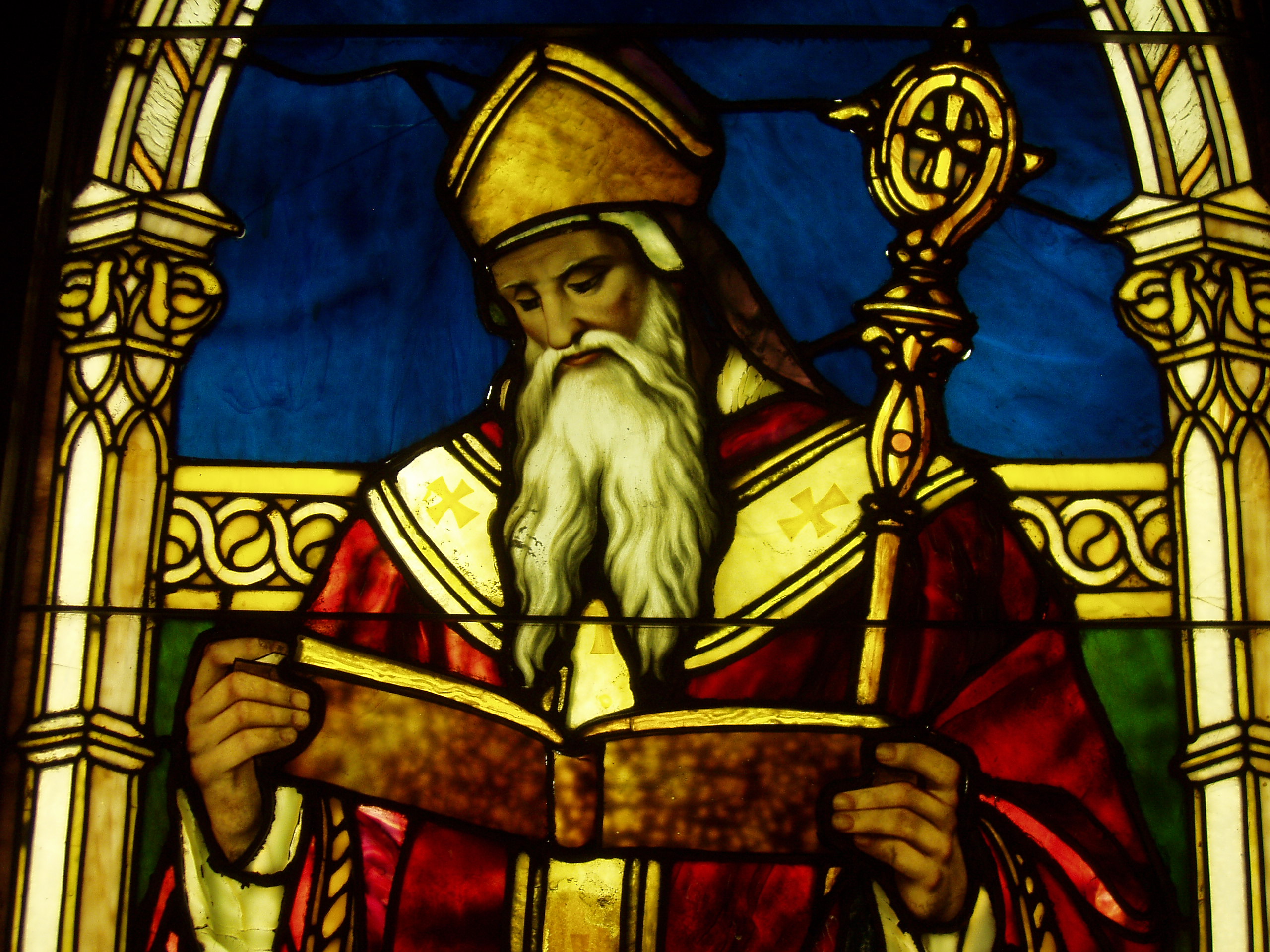
Augustine of Hippo (354-430) was the first major Christian theologian to define how a war might be considered as Just, but theory has been refined and developed over the centuries.

The classic Just War theory can be divided into principles to consider before engaging in war, and secondly principles for conducting a just war. They are usually set out as below, with some minor variations:

Preparation for war
i)      War must be undertaken and waged exclusively by the leaders of the State
ii)    War must be waged for a just cause. 
iii)   Resource to war must be a last resort. 
iv)  There should be a formal declaration of war. 
v)    Those engaging in war must have a reasonable hope of success. 
vi)  The evil and damage which the war entails must be judged to be proportionate to the injury it is designed to avert or the injustice which occasions it.  

Conduct of war
i)      Non-combatants must not be attacked directly.
ii)    Methods of fighting must be proportionate to the just cause and objectives of the war. 
You will realise that many of these criteria are open to debate, and this often keeps the moral philosophers busy at times of war!

So is the war against Gadaffi a Just War? Clearly those who voted in the United Nations and in the Westminster Parliament were broadly persuaded of it, but it is probably, as with most things, open to debate. What we must clearly do as Christians, is to pray for those who have to take these decisions, that they may act justly and wisely. We must pray for the people of Libya, that they may be kept safe so that they may have the opportunity to come to know freedom in Christ. We must pray too for the armed forces involved in the conflict, that they would act justly, proportionately and seek to preserve life.

Amidst all of this we know that we follow Christ, who offers hope where there seems to be no hope, and life in the face of death. Resurrection Sunday reminds us that Jesus has conquered death, and as we go through the ‘dark valley’ of Maundy Thursday, Good Friday and Easter Saturday, we know that the Day of Resurrection is just around the corner.

God bless,

Nik